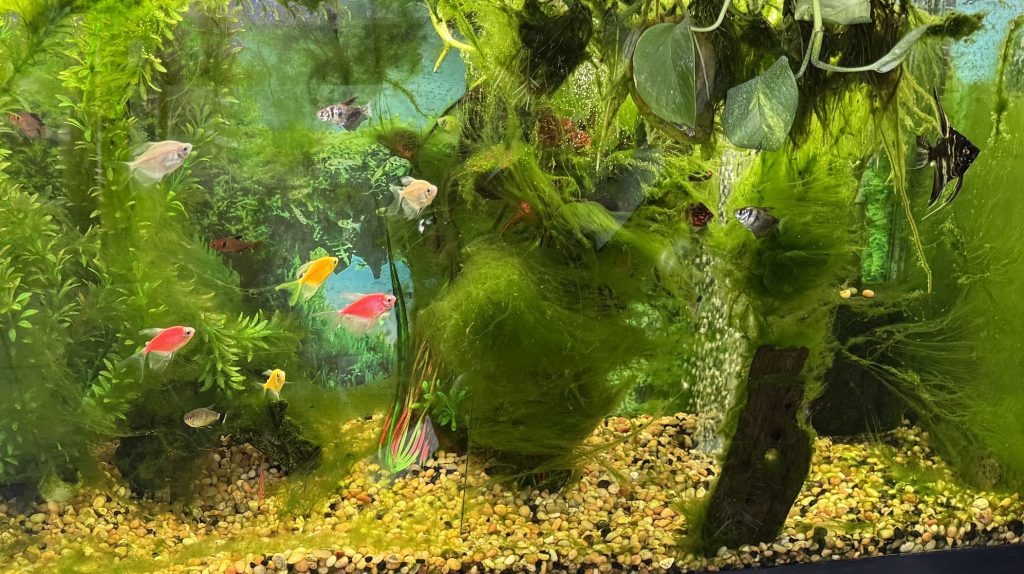
How do you get rid of algae in a fish tank? While there are many ways to control algae, many aquarists opt for the easiest and most fun solution: add an algae eater!
But not all algae eaters are created equally. Some get way too big for most aquariums, are aggressive, or don’t actually eat algae at all. Regardless of the fish or invertebrate you choose, you should remember that your algae eater is another living creature that you must care for; it must be fed (more than algae) and cleaned up after.
What is the best algae eater?
It depends on many factors: how big your tank is, what kind of algae you are dealing with, and other details of your setup.
Before we talk about what the best algae eater is based on your tank size, we’ll talk about why they aren’t required for a healthy aquarium.
- Do You Have to Have an Algae Eater?
- Best Algae Eaters for 5+ Gallon Tanks
- Best Algae Eaters for 10+ Gallon Tanks
- Best Algae Eaters for 20+ Gallon Tanks
- Best Algae Eaters for 55+ Gallon Tanks
- Best Algae Eaters for Very Large Aquariums (125+ Gallons)
- Frequently Asked Questions
- Conclusion
Do You Have to Have an Algae Eater?
While “suckerfish” are often touted as necessary inhabitants for your tank, they are completely optional! Algae is a little ugly, but won’t hurt your fish. Algae eaters can be fun and interesting additions to your aquarium, and they can help you manage that delightful green slime coating every surface of your tank. However, it is important to note that algae eaters simply turn algae into poop, and the increased bioload in your tank may actually mean more maintenance.
Algae eaters are your little helpers, not tiny janitors responsible for keeping the tank clean. If you are prepared to feed, house, and tend to another fish in your tank, now it’s time to decide what algae eater is best for you, based on your tank size.
Best Algae Eaters for 5+ Gallon Tanks
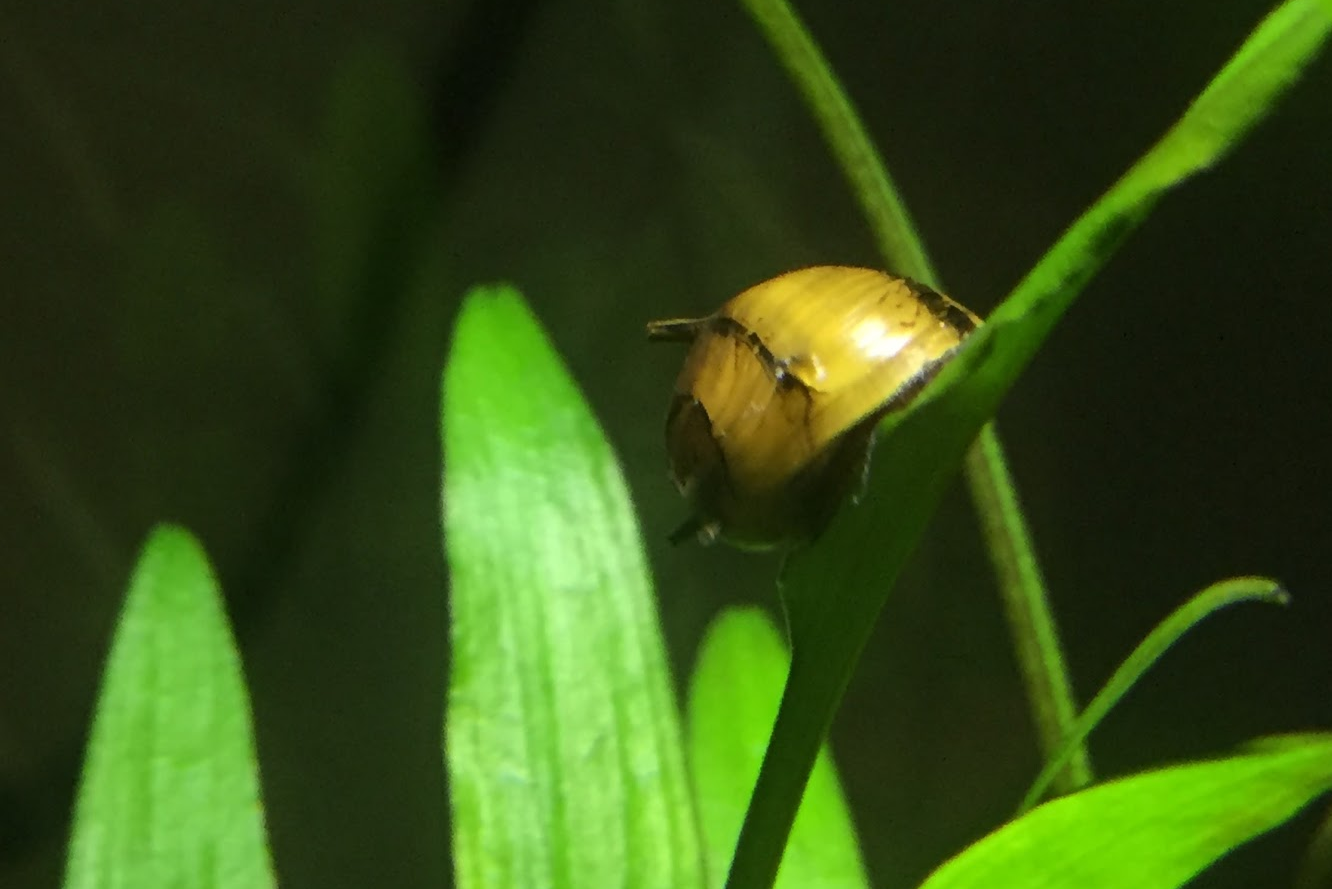
Nerite Snail (Neritina sp.)
Nerite snails are great algae eaters for small tanks because they come in tons of fun colors (spots, strips, and more!), don’t get huge, and don’t reproduce in freshwater! They are easy to care for, and they will make quick work of an algae problem. I had a little horned nerite in my college betta tank, and I never had to clean off any algae myself, despite the lights being left on all. day. long. A female nerite snail may lay little white eggs all over the aquarium, but they will not hatch successfully. Eggs can be removed with an algae scraper or a strong fingernail.
- Adult size: up to 1 inch (2.5 cm), species dependent
- Minimum tank size: 5 gallons (~20L)
- Supplemental foods: picky; can offer algae wafers and blanched vegetables
- Care difficulty: easy
- Species notes: won’t reproduce in freshwater; eggs can be scraped off
Amano Shrimp (Caridina multidentata)
Amano shrimp are the best algae-eating shrimp, and one of the best algae eaters overall. They are positively voracious when it comes to green slime! While they are much more difficult to breed than cherry shrimp (requiring brackish water to reproduce), they will make short work of your algae problem, whether you are dealing with brown diatoms, hair algae, black beard algae, or green spot algae.
- Adult size: 2 inches (5 cm)
- Minimum tank size: 5 gallons (~20 L)
- Supplemental foods: algae wafers, shrimp pellets, blanched vegetables
- Care difficulty: moderate
- Species notes: require a stable and established aquarium; keepers must monitor mineral levels
Cherry Shrimp (Neocaridina davidi)
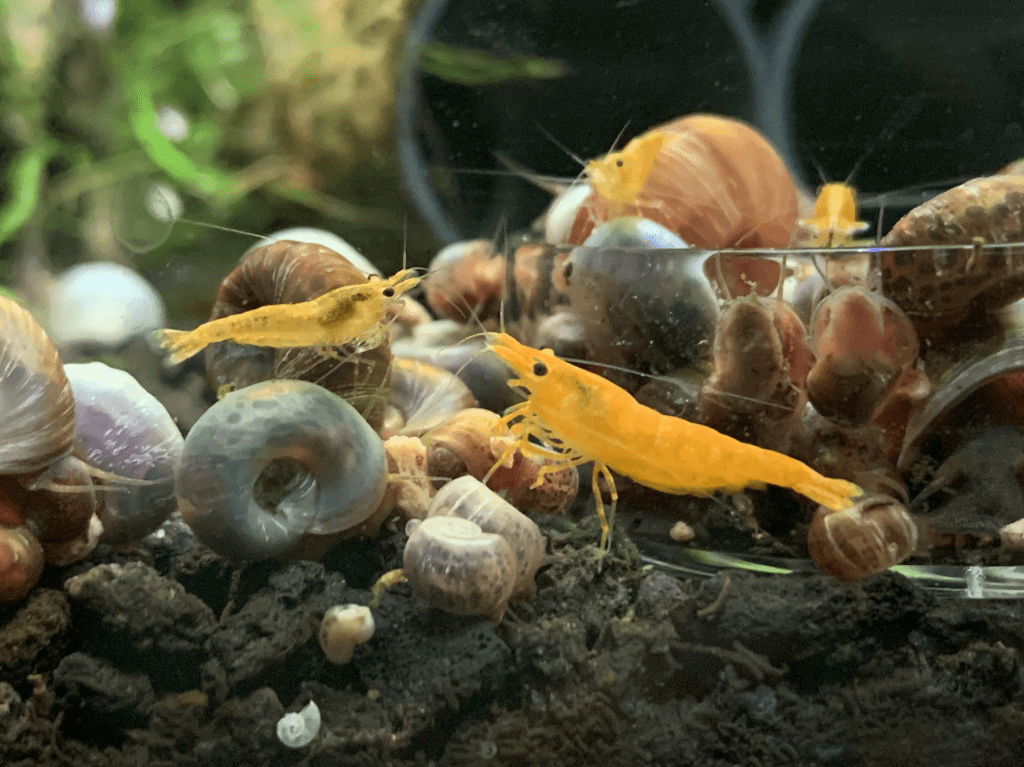
Despite their name, cherry shrimp come in a huge variety of colors other than red. I personally have a colony of little orange ones! Cherry shrimp love to chow down on algae and biofilm, but they are too small to make an appreciable difference in an algae-infested tank. They are best at keeping algae from getting out of hand in an established aquarium.
- Adult size: 1.5 inches (4 cm); females larger than males
- Minimum tank size: 5 gallons (~20 L)
- Supplemental foods: algae wafers, shrimp pellets, blanched vegetables
- Care difficulty: moderate
- Species notes: require a stable and established aquarium; keepers must monitor mineral levels
Ramshorn Snail (Planorbella sp.)
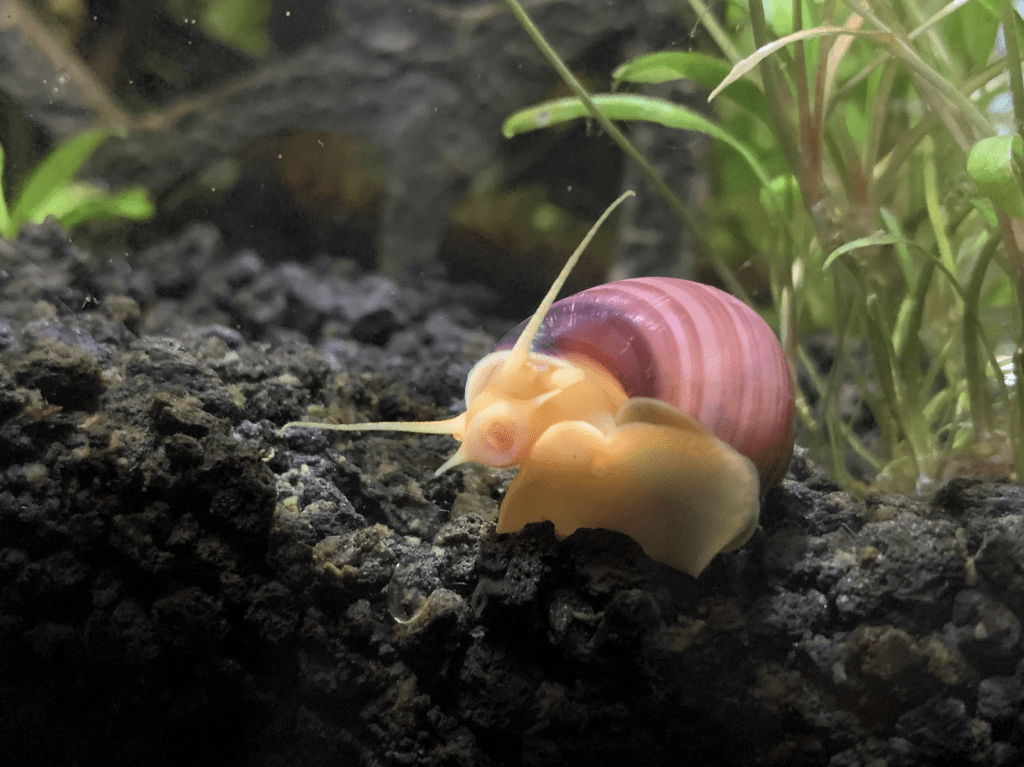
Often considered to be “pest snails,” ramshorns are exceptional algae eaters and are found in a variety of colors, from blue to pink, solid to spotted. I recommend at least a 10-gallon tank for ramshorns for one reason: while these snails stay small, they will reproduce rapidly in environments with adequate food. The snails are hermaphroditic (having both male and female reproductive organs) and can store reproductive material (snail sperm…snerm) for a long time, possibly even over a year. A hitchhiker or two on a new plant could lead to your tank being overrun by tiny mollusks.
- Adult size: 1 inch (2.5 cm)
- Minimum tank size: 5 gallons (~20 L) if you carefully manage population
- Supplemental foods: algae wafers, blanched vegetables, snello, cuttle bone for calcium, sinking pellets
- Care difficulty: easy
- Species notes: can overpopulate a tank if food is not limited
Best Algae Eaters for 10+ Gallon Tanks
Otocinclus (Otocinclus sp.)
Otocinclus (or simply known as otos or dwarf suckermouth catfish) are small schooling catfish that are very effective algae eaters. Their favorite kinds of algae are the softer varieties like brown diatoms or some forms of green algae. They are schooling fish and should be kept in groups of at least six individuals. Despite their small size, their social requirements and sensitivity to sudden changes in water parameters make them need a larger tank than you’d expect.
- Adult size: 2 inches (5 cm)
- Minimum tank size: 10 gallons (~40 L)
- Supplemental foods: algae wafers, blanched vegetables, BacterAE, Repashy Soilent Green
- Care difficulty: moderate
- Species notes: many otos are wild-caught and can be picky with their food and water
Mystery Snail (Pomacea diffusa)
Mystery snails get a little bit larger than their nerite cousins, and they eat a wider variety of foods. They will happily munch on algae and biofilm, but they will also eat leftover fish food, sinking pellets, and dying aquarium plants (but they usually don’t touch healthy ones). These snails are pretty hardy, but keep an eye on their shell health! If the pH is too low or if there isn’t enough calcium in their water or diet, their white, gold, purple, black, or blue shells may become noticeably brittle.
- Adult size: 3 inches (7.6 cm)
- Minimum tank size: 10 gallons (40 L)
- Supplemental foods: algae wafers, blanched vegetables, snello, cuttle bone for calcium, sinking pellets
- Care difficulty: easy-to-moderate
- Species notes: monitor pH and water hardness; provide supplemental calcium for shell health
Best Algae Eaters for 20+ Gallon Tanks
Bristlenose Plecostomus (Ancistrus cirrhosus)
One of the most popular algae eaters for medium-sized tanks is the bristlenose pleco. This dwarf pleco species gets its name from the branch-like protrusions that mature males develop on their snouts. They are hardy, forgiving of many beginner mistakes, and get along with a wide variety of tankmates, although males can be territorial towards each other. In addition, they are one of the easiest pleco species to breed and have been cultivated in several fun varieties, like albino, lemon blue-eye, red, green dragon, and marbled.
- Adult size: 5 inches (12.7 cm)
- Minimum tank size: 20 gallons (~80 L)
- Supplemental foods: algae wafers, sinking pellets, blanched vegetables,
- Care difficulty: easy
- Species notes: males are territorial with each other
American Flagfish (Jordanella floridae)
The American flagfish (or Florida flagfish, or just flagfish), is one of the few creatures that will eat the most cursed of algae: hair and black beard. These fish, native to the state of Florida, thrive in unheated tanks. They can be kept at temperatures from 64-80° F (18-27° C), with the optimum temperature range being 68-72° F (20-22° C). They can be kept with a wide variety of peaceful tank mates, but they may eat shrimp.
- Adult size: 2.5 inches (6 cm)
- Minimum tank size: 20 gallons (~80 L) for a pair
- Supplemental foods: most commercial fish foods, as well as algae wafers; not picky
- Care difficulty: easy
- Species notes: increase tank size if keeping more than one male
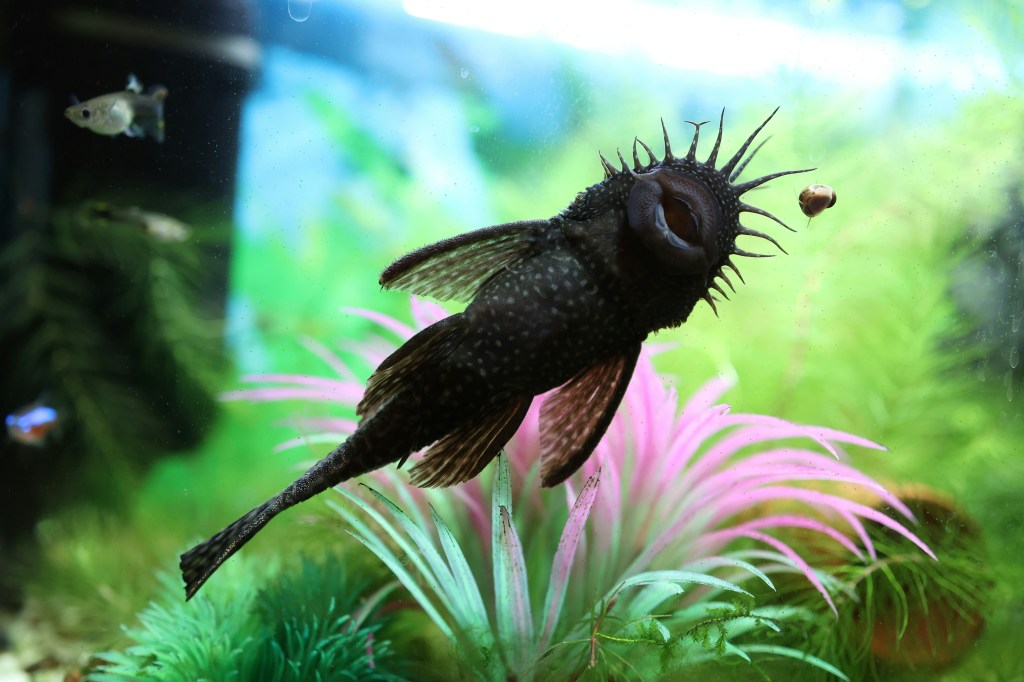
Rubber-lip Plecostomus (Chaestoma milesi)
Plecos are one of the most commonly sold algae eaters, but many of the common species get way too large for most aquarists. But not all species grow into 2-foot giants! The rubber-lip pleco is a fun-sized species that stays under 6 inches (15 cm) and still does a great job at helping to keep algae. Also known as the bulldog pleco, this hardy suckerfish gets its name from its blunt, rounded nose. It is brownish-green in color with adorable black spots, and it loves caves and other hiding places.
- Adult size: 5 inches (12.7 cm)
- Minimum tank size: 20 gallons (~80 L)
- Supplemental foods: algae wafers, sinking pellets, blanched vegetables
- Care difficulty: easy
- Species notes: peaceful, but can be territorial toward other bottom dwellers.
Panda Garra (Garra flavatra)
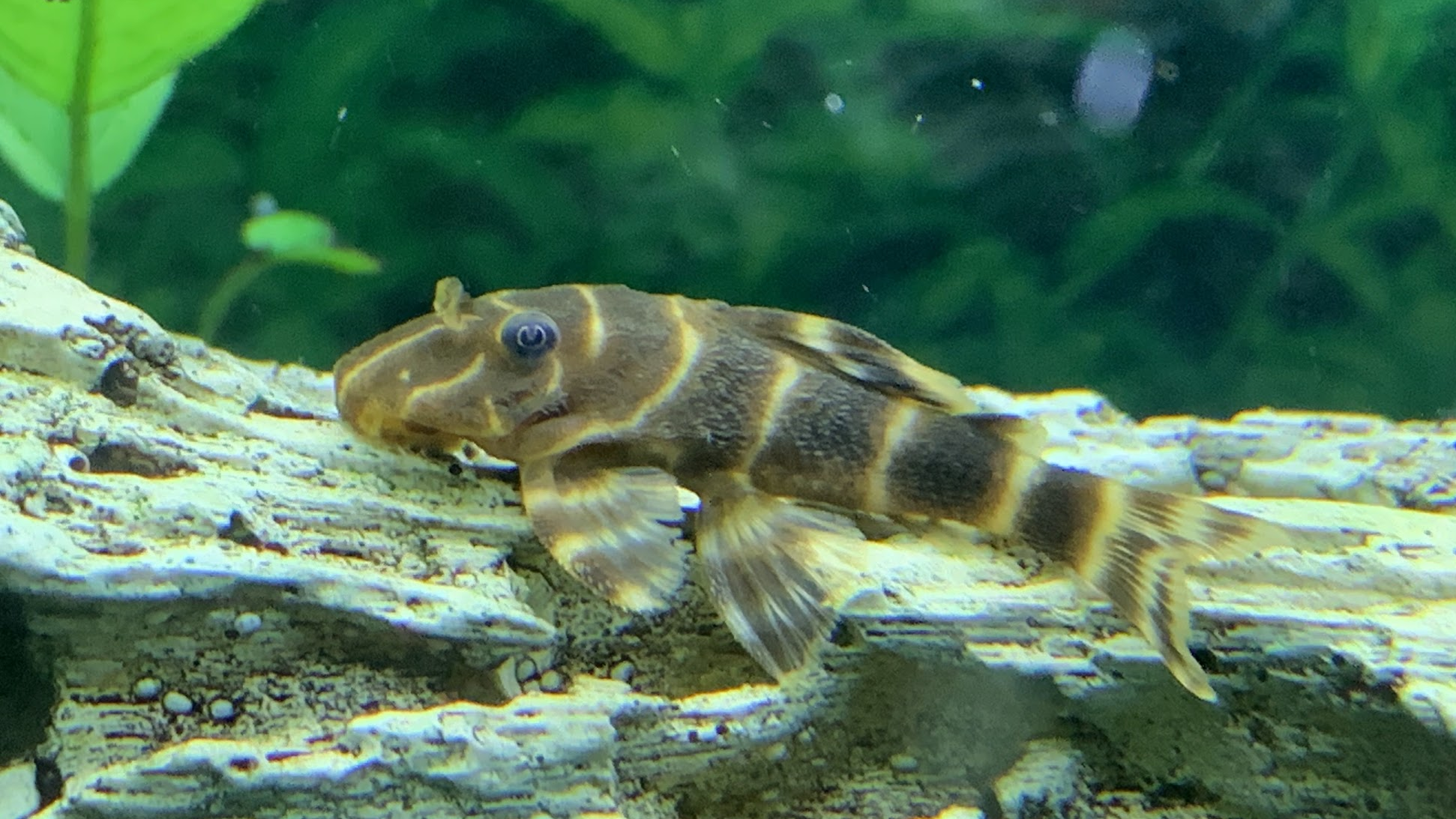
The panda garra is an excellent algae eater that will tackle many kinds of soft algae, including green spot and brown diatoms. They get their name from the alternating bands of brown and yellow down their bodies. While they can be kept in community setups, they can be aggressive upon reaching maturity, especially the males, and they may not make good tank mates for every fish. As with any new fish, make sure to research species compatibility and get anecdotes from other fish keepers about their experiences.
- Adult size: 3 inches (7.6 cm)
- Minimum tank size: 20 gallons (~80 L)
- Supplemental foods: algae wafers, sinking pellets, blanched vegetables, frozen bloodworms and brine shrimp
- Care difficulty: moderate
- Species notes: social—keep in groups of 5+; like tanks with high oxygen
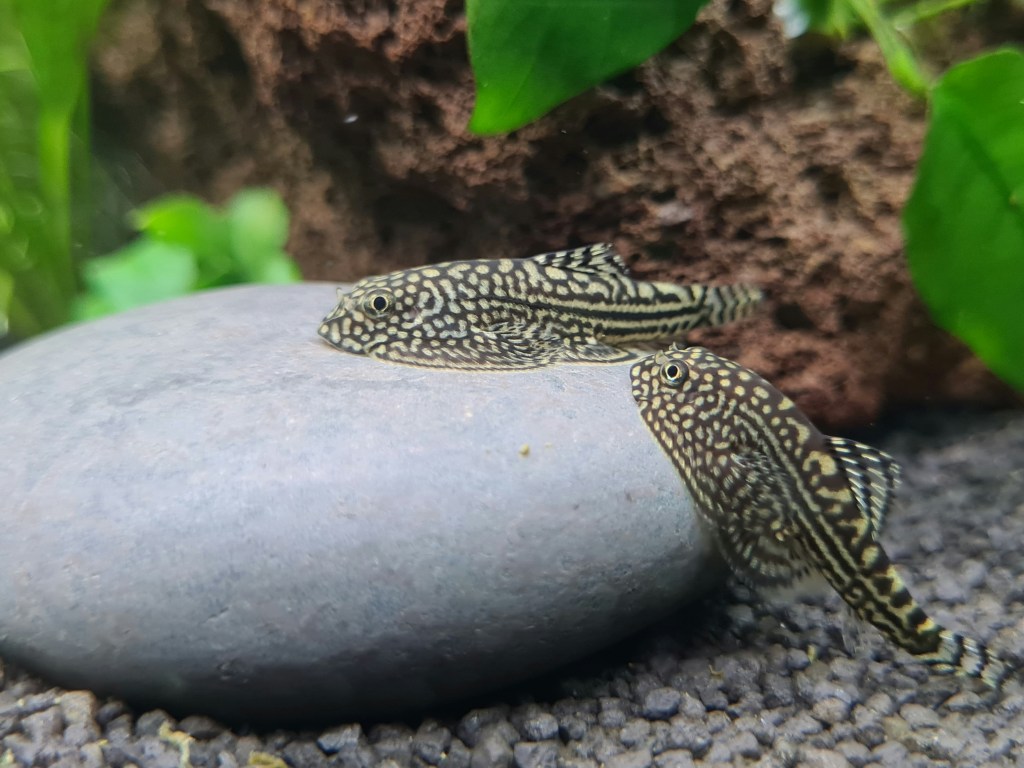
Hillstream Loach (Sewellia lineolata)
Hillstream loaches are great algae eaters for coldwater aquariums. Their wing-like pectoral and pelvic fins have earned them the additional nickname of “butterfly loach.” Hailing from the streams of southeastern Asia, these funky little guys need high-flow aquariums to mimic their natural habitat. They also prefer to be kept in groups of at least three individuals, with larger groups allowing their keepers to witness more natural behaviors.
- Adult size: 3 inches (7.6 cm)
- Minimum tank size: 20 gallons (~ 80 L)
- Supplemental Foods: algae wafers, blanched vegetables
- Care difficulty: moderate
- Species notes: need high-flow tanks; keep in groups of 3+ individuals
Best Algae Eaters for 55+ Gallon Tanks
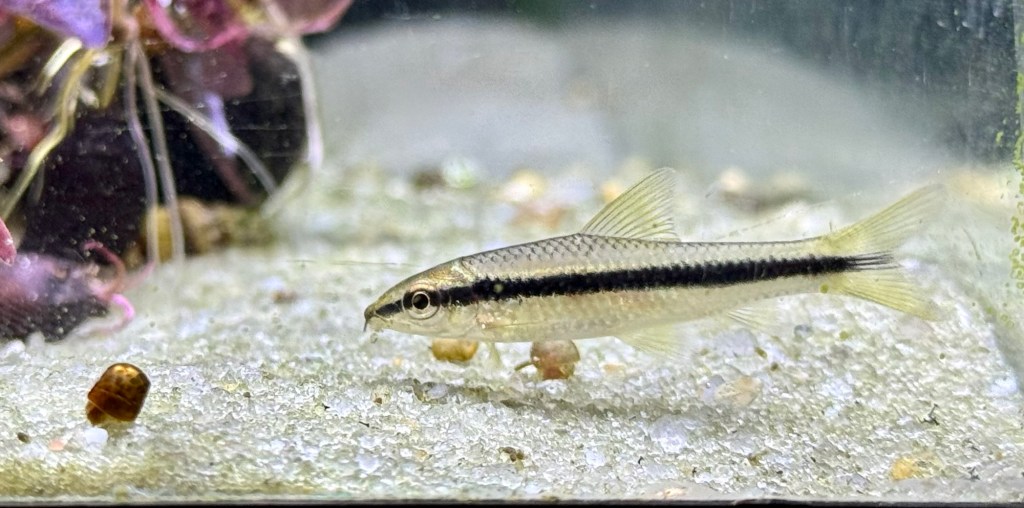
Siamese Algae Eater (Crossocheilus oblongus)
Unlike most of the other species on this list, the Siamese algae eater (SAE) will eat almost any type of algae, from soft brown diatoms to the infamous hair algae. SAEs are relatively peaceful with other fish, but they are voracious eaters and should be paired only with speedy species that can compete with them for food. They can also be territorial with one another, so keep at least three individuals together if keeping multiples to disperse aggression. They can be kept as a single specimen, but some keepers note that they can be shy when all by themselves.
- Adult size: 6 inches (15 cm)
- Minimum tank size: 55 gallons (208 L)
- Supplemental foods: sinking pellets, algae wafers, blanched vegetables
- Care difficulty: moderate; can be temperamental
- Species notes: can be territorial; keep singly or in groups of 3+
Green Phantom Plecostomus
The green phantom pleco looks like a species from another planet with its unique, green-gold coloration. While not as enthusiastic as the Siamese algae eater, green phantoms will reduce some of the soft, easily consumed algae in your tank. If you are looking for an interesting, mid-sized pleco that will also help out a little with tank maintenance, a green phantom may be right for you! While they are an “algae eater,” they are omnivorous, and they still need to be supplemented with other foods.
- Adult size: 7 inches (18 cm)
- Minimum tank size: 55 gallons (208 L)
- Supplemental foods: algae wafers, blanched vegetables, frozen bloodworms and shrimp
- Care difficulty: moderate
- Species notes: sensitive to poor water quality and needs varied diet
Best Algae Eaters for Very Large Aquariums (125+ Gallons)
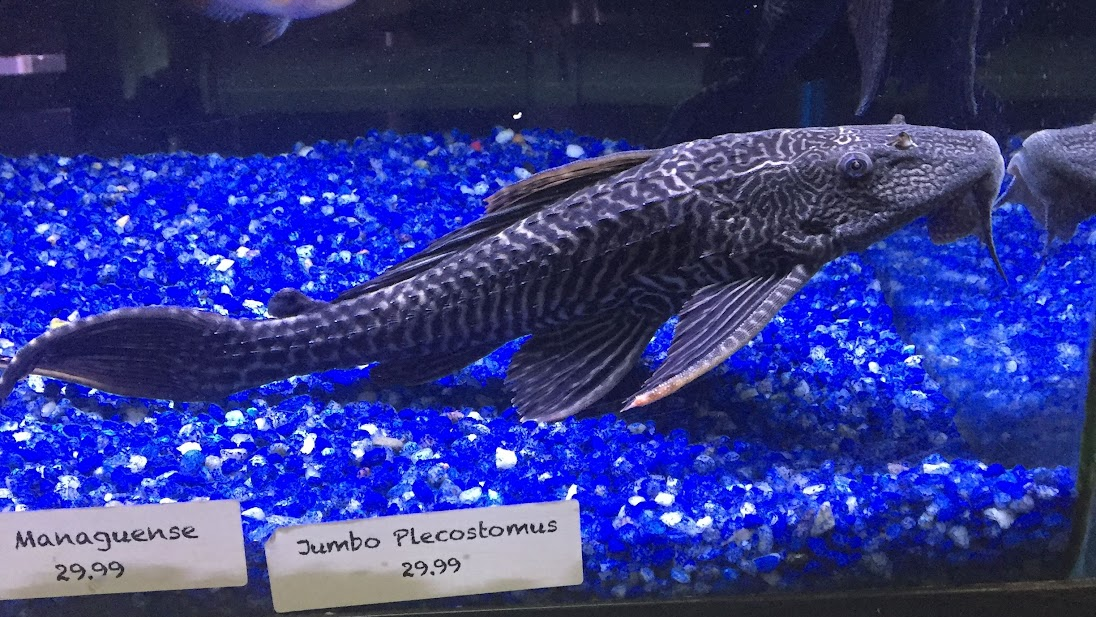
Common Plecostomus (Hypostomus plecostomus)
I am a firm believer that common plecos, one of the most readily available algae eaters, should only be sold in specialty fish stores—if they are sold at all. The cute little suckerfish at your local pet store may only be two or three inches long, but they have the potential to become two-foot monstrosities. When I was a child, my family made the mistake of putting one of these guys in a ten-gallon. This single fish produced piles of poop. While they are effective algae eaters, they need huge tanks to accommodate their giant size and matching bioload.
- Adult size: 24 inches (60 cm)
- Minimum tank size: 125 gallons (~470 L)
- Supplemental foods: algae wafers, blanched vegetables, occasional meaty fish foods
- Care difficulty: moderate
- Species notes: need huge tanks!
Sailfin Plecostomus (Pterygoplichthys gibbiceps)
Similar to the common pleco, the sailfin pleco also gets massive and is one of the best algae eaters for large tanks. It gets its name from its huge dorsal fin that resembles a sail. With proper care, these stunning fish can live to be 20+ years old. While they do eat algae and other plant material, they also require some soft driftwood to help their digestion.
- Adult size: 20 inches (50 cm)
- Minimum tank size: 125 gallons (~470 L)
- Supplemental foods: algae wafers, blanched vegetables, occasional meaty fish foods, driftwood
- Care difficulty: moderate
- Species notes: get huge; require driftwood for digestion
Frequently Asked Questions
Are Chinese algae eaters good algae eaters?
Chinese algae eaters (sometimes labeled simply as “algae eaters”) are decent at eating algae while they are young, but this changes as they age. As the fish matures, it begins to seek protein, which it tries to obtain by eating its tankmates. CAEs are semi-aggressive and should only be kept with other semi-aggressive fish that can hold their own. Also, they can reach 10 inches (25 cm) in length.
Are clown plecos good algae eaters?
The clown plecostomus is not an effective algae eater. While some other plecos are voracious algae eaters, clown plecos prefer to rasp on driftwood. They might nibble on some algae every now and then, but they need soft wood in the tank for their digestion. I had a clown pleco for several years, and there was never an appreciable difference in algae until I took steps to manage the algae myself.
How can I manage algae without an algae eater?
While the fastest way to get rid of algae is manual removal with an aquarium-safe sponge or scraper, it isn’t a long-term solution. Algae is caused by an imbalance of light, nutrients, and carbon dioxide. Reducing the length of time your aquarium light is on will help. Performing larger or more frequent water changes will cut down on the organic matter available to the algae, and live plants will compete against it for resources. Advanced aquarists may want to experiment with supplementing carbon dioxide, which will give plants the boost they need to win against an algae epidemic.
Conclusion
While it might be ugly, algae isn’t harmful to fish. Nevertheless, an algae eater can help you keep algae in check and also be an interesting member of your underwater community. While algae eaters are helpful, they do not replace tank maintenance and still require supplemental food. Few organisms can survive on algae alone!
Whatever algae-munching critter is right for you, make sure to plan for its adult size. The two-inch pleco in your local pet store won’t stay that small forever. Even if a fish stays small, it may benefit from the stability of a larger aquarium.
As always, make sure you do your research, and happy fishkeeping!

 The Nature Corner